Our Location
304 North Cardinal St.
Dorchester Center, MA 02124

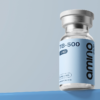
$39.99
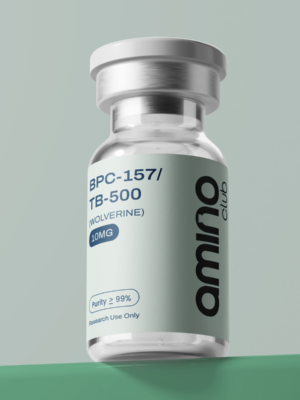
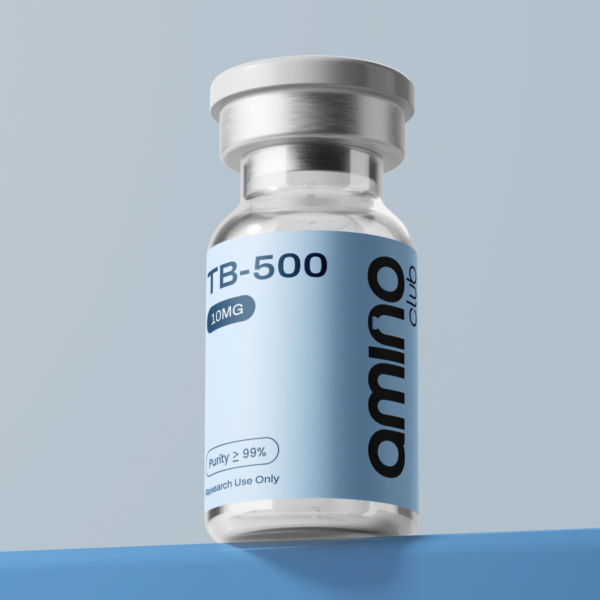
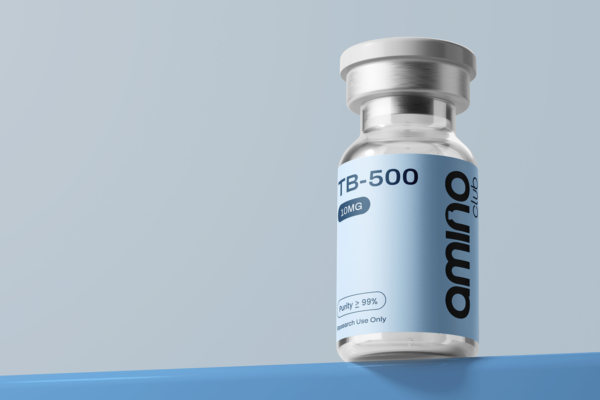
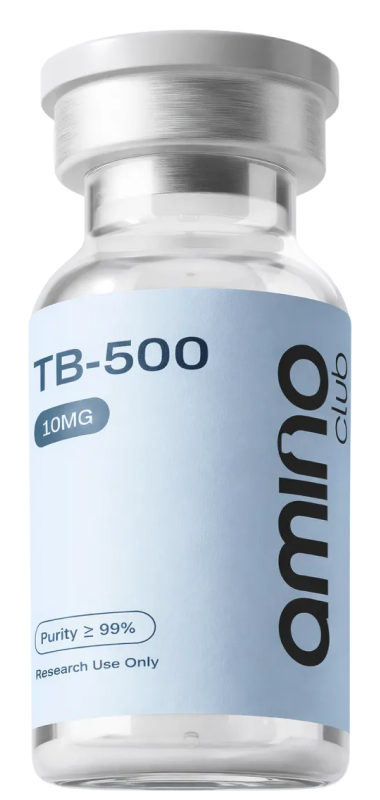
Buy TB-500 Research Peptide for sale by Peptide Amino Club. TB-500 is a synthetic research peptide commonly associated with scientific investigations into thymosin beta-4, actin dynamics, cellular migration, and cytoskeletal biology. Its relationship to thymosin beta-4 has made it an area of interest for researchers examining how peptide molecules interact with cellular structures and signaling pathways.
Thymosin beta-4 is a naturally occurring peptide involved in biological processes related to actin regulation and cell movement. Research in this area has explored mechanisms involving G-actin binding, cytoskeletal remodeling, cell migration, and angiogenesis-related signaling. TB-500 provides researchers with a peptide material for investigating these pathways in controlled laboratory models.
Amino Club Peptides offers TB-500 Research Peptide for research-focused applications where peptide identity, purity, analytical characterization, and batch documentation are important considerations.
TB-500 Research Peptide is supplied strictly for research use only. It is not intended for human or veterinary use, self-administration, diagnosis, treatment, or prevention of any disease or medical condition.
TB-500 Research Peptide is a synthetic peptide commonly associated with research surrounding thymosin beta-4 (Tβ4) and its role in cellular and cytoskeletal biology. The peptide has attracted considerable interest within laboratory research because of the biological processes associated with the thymosin beta-4 family.
Thymosin beta-4 is a naturally occurring 43-amino-acid peptide that interacts with actin, an important structural protein within cells. Actin participates in cell shape, movement, intracellular organization, and cytoskeletal remodeling.
Research involving thymosin beta-4 has investigated processes including actin regulation, cell migration, cellular signaling, and angiogenesis-related pathways. TB-500 is frequently studied in commercial research settings in connection with this scientific literature.
Researchers should nevertheless distinguish TB-500 from full-length thymosin beta-4 when evaluating scientific evidence. Different peptide sequences, fragments, analogues, and formulations may have different molecular properties and should not automatically be considered interchangeable.
TB-500 is a synthetic research peptide associated with the biological research surrounding thymosin beta-4.
Thymosin beta-4 belongs to a family of small peptides involved in cellular processes. One of its best-characterized molecular interactions is with G-actin, the monomeric form of actin.
Actin exists in dynamic forms within cells. It can assemble into filaments and disassemble as cellular conditions change. This dynamic behavior is essential for processes such as cell migration, cellular structure, and cytoskeletal remodeling.
Because of this relationship, thymosin beta-4 has been investigated extensively in experimental cellular biology.
TB-500 is marketed as a research peptide related to this field. However, researchers should always verify the exact molecular identity and analytical characterization of the material being studied rather than assuming that every product described as TB-500 is identical to full-length thymosin beta-4.
The actin cytoskeleton is a highly dynamic component of cells. It provides structural support while also allowing cells to change shape and move through their surrounding environment.
Actin can exist as individual globular units known as G-actin or as polymerized filaments known as F-actin. The balance between these forms is constantly regulated by numerous cellular proteins.
Thymosin beta-4 has been studied because of its ability to bind G-actin and influence the pool of actin available for filament formation.
This provides an important scientific basis for research into:
The broader thymosin beta-4 literature also includes experimental investigations involving angiogenesis, cellular responses, and tissue-associated biological processes.
Importantly, findings involving thymosin beta-4 should not automatically be interpreted as evidence for an equivalent effect from every TB-500 preparation.
One of the central areas of research interest surrounding TB-500 is its relationship to actin biology.
Actin contributes to several fundamental cellular functions, including:
Cell movement requires coordinated remodeling of the actin cytoskeleton. Researchers can therefore use appropriate experimental systems to investigate how peptide-associated mechanisms interact with these processes.
This makes TB-500 relevant to laboratory research involving cytoskeletal dynamics and cellular migration.
Thymosin beta-4 has been characterized for its ability to bind G-actin. This interaction is important because the availability of G-actin influences the formation and remodeling of actin filaments.
Researchers studying TB-500-related biology may therefore investigate changes in actin organization and associated cellular behavior.
Cells continuously reorganize their cytoskeleton in response to their environment.
Cytoskeletal remodeling supports cellular movement, shape changes, and other dynamic processes. Experimental studies involving thymosin beta-4 have examined these mechanisms in different cellular models.
Cell migration is a complex process involving actin polymerization, cellular adhesion, membrane dynamics, and intracellular signaling.
Research involving thymosin beta-4 has explored cellular migration in several experimental settings, making this an important area for further laboratory investigation.
The thymosin beta-4 research literature has also examined processes associated with angiogenesis, including endothelial-cell behavior and signaling.
These findings provide a basis for laboratory investigation into the molecular mechanisms involved in vascular development and cellular movement.
Such experimental observations should not be presented as evidence that TB-500 is an approved treatment for vascular or other medical conditions.
TB-500 can be investigated in experimental models examining actin organization and cytoskeletal dynamics.
Researchers may evaluate cellular morphology, actin distribution, and associated molecular markers under controlled conditions.
Laboratory models can be used to investigate cellular migration and the molecular processes that allow cells to move through their environment.
TB-500-related research may therefore be relevant to studies examining migration-associated signaling and cytoskeletal changes.
Synthetic peptide research often focuses on understanding how molecular structure affects biological interactions.
TB-500 provides an opportunity to investigate the relationship between peptide characteristics and cellular responses while maintaining appropriate experimental controls.
Researchers may investigate pathways associated with cytoskeletal organization, cellular migration, and related signaling mechanisms.
Experimental results should always be interpreted according to the specific cell type, model, concentration, and research conditions used.
Because thymosin beta-4 has been investigated in angiogenesis-related models, researchers may explore TB-500-associated mechanisms in controlled vascular-cell systems.
This represents an area of experimental research rather than an established clinical application.
Researchers should understand the terminology surrounding TB-500 and thymosin beta-4.
Thymosin beta-4 is a naturally occurring 43-amino-acid peptide. TB-500 is generally described commercially as a synthetic peptide associated with thymosin beta-4 research.
The terms are therefore not necessarily interchangeable.
When reviewing scientific literature, researchers should determine whether a study used:
This distinction is essential when interpreting experimental findings and comparing results between different studies.
Reliable research begins with appropriately characterized experimental materials.
Amino Club focuses on research-oriented peptide products and provides applicable product information and analytical documentation when available.
Researchers evaluating TB-500 Research Peptide may consider factors such as peptide identity, purity, analytical characterization, batch information, formulation, and applicable storage requirements.
For researchers purchasing from Amino Club Peptides, reviewing the applicable Certificate of Analysis (COA) and batch documentation before beginning experiments is recommended. These documents can help researchers establish appropriate experimental controls and understand the characteristics of the material being evaluated.
Amino Club maintains a research-use positioning and does not present TB-500 as an approved therapeutic product.
The stability of research peptides can depend on their molecular structure, formulation, packaging, moisture exposure, temperature, light, and storage duration.
Researchers should follow the specific storage instructions supplied with the TB-500 Research Peptide and refer to the applicable Certificate of Analysis for batch-specific information.
As a general laboratory practice, research peptides should be protected from excessive heat, moisture, and direct light. Unnecessary exposure to environmental conditions should be minimized, and repeated temperature fluctuations should be avoided where practical.
Product-specific documentation should take priority over generalized peptide-storage recommendations.
For Research Use Only.
TB-500 Research Peptide is supplied exclusively for laboratory research, analytical, and educational purposes. It is not intended for human or veterinary use, self-administration, diagnosis, treatment, prevention, or cure of any disease or medical condition.
Researchers are responsible for ensuring that the handling, storage, testing, use, and disposal of research materials comply with applicable laws, regulations, institutional requirements, and laboratory safety procedures.
Research findings involving thymosin beta-4 should not automatically be interpreted as evidence establishing the safety or efficacy of TB-500. Results should be evaluated according to the exact material, experimental model, methodology, and conditions used.
| Form | Lyophilized powder |
|---|---|
| Supplement Type | Peptide |
| Purity Level | >99% |
| Testing Standards | HPLC tested, Mass spectrometry verified |
| Quality Control | cGMP certified facility |
| Storage | Store at -20°C or below |
| Shelf Life | 2+ years when properly stored |
| Container Type | Vial (sealed, flip top, 3ml) |
| Usage | Laboratory research use only |
| Highlight | Extracellular Matrix Research Applications |