Our Location
304 North Cardinal St.
Dorchester Center, MA 02124

$29.99
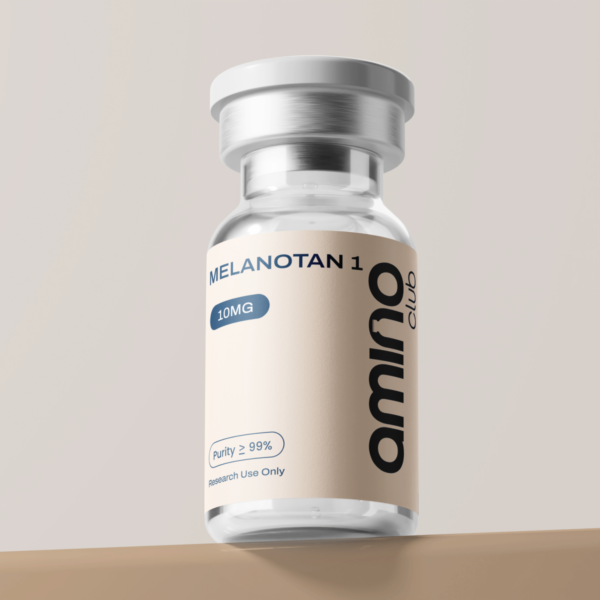
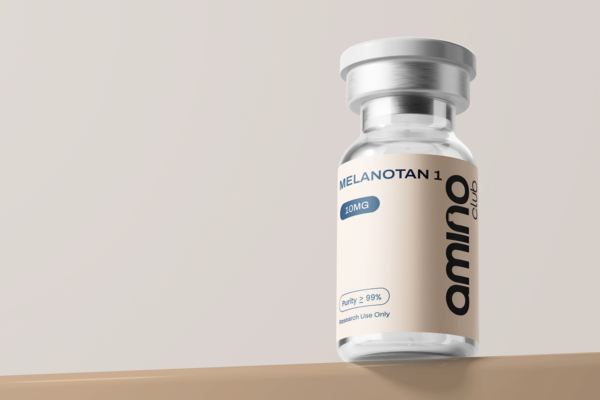
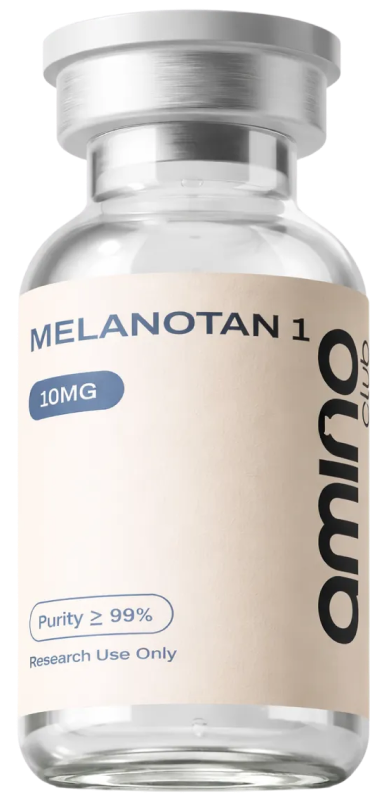
Buy Melanotan I Research Peptide for sale by Peptide Amino Club. Melanotan I, also known as afamelanotide or [Nle4-D-Phe7]-α-MSH, is a synthetic 13-amino-acid analogue of alpha-melanocyte-stimulating hormone (α-MSH). It has been extensively investigated in melanocortin and pigmentation research because of its interaction with the melanocortin-1 receptor (MC1R), a receptor expressed by melanocytes.
Activation of MC1R is associated with intracellular cAMP signaling and increased melanogenesis, making Melanotan I relevant to research involving melanocyte biology, melanin synthesis, pigmentation pathways, and photobiology.
Aminoclub provides research-oriented peptide materials for laboratory investigation, while Amino Club Peptides are positioned strictly for research-use applications. Melanotan I should not be confused with unregulated products marketed online for tanning purposes. This research material is not intended for human or veterinary use, self-administration, or therapeutic applications.
Melanotan I Research Peptide is a synthetic analogue of α-melanocyte-stimulating hormone (α-MSH) that has been extensively studied in melanocortin, pigmentation, and photobiology research. Also known as afamelanotide, Melanotan I is a 13-amino-acid peptidomimetic designed to retain important biological characteristics of α-MSH while incorporating structural modifications.
The peptide has particular research relevance because of its interaction with the melanocortin-1 receptor (MC1R) on melanocytes. MC1R is a major regulator of melanogenesis, and its activation influences signaling pathways involved in the production of melanin.
For laboratories investigating melanocyte biology, melanin synthesis, receptor signaling, and peptide-based photobiology, Melanotan I provides a well-characterized research molecule with a substantial scientific literature.
Important distinction: Afamelanotide is also the active ingredient in an FDA-approved prescription product, SCENESSE®, for a specific medical indication. The research material described on this page should not be represented as that approved pharmaceutical product. The FDA-approved indication is to increase pain-free light exposure in adults with a history of phototoxic reactions from erythropoietic protoporphyria (EPP).
Melanotan I is a synthetic analogue of alpha-melanocyte-stimulating hormone, a naturally occurring melanocortin peptide involved in pigmentation biology. Its formal description is [Nle4-D-Phe7]-α-MSH, reflecting two structural modifications relative to native α-MSH.
Unlike the shorter α-MSH molecule, Melanotan I was developed to provide a more durable melanocortin signal. Its research history extends back several decades and includes laboratory, animal, and human studies investigating pigmentation and melanocortin receptor activity.
Research published in humans has demonstrated that [Nle4-D-Phe7]-α-MSH can stimulate eumelanin production and produce measurable changes in pigmentation. Earlier experimental work also investigated controlled-release formulations and their effects on melanogenic activity.
These studies make Melanotan I particularly useful as a research tool for investigating the relationship between peptide structure, melanocortin receptors, melanogenesis, and pigmentation.
The melanocortin system includes several peptide hormones and receptors involved in diverse biological processes. Among these receptors, MC1R has a central role in melanocyte biology.
α-MSH binds to MC1R on melanocytes and activates intracellular signaling pathways involving cyclic AMP (cAMP). This signaling cascade influences proteins involved in melanin production, including pathways associated with tyrosinase and other melanogenic factors.
Melanin itself is a complex biological pigment. Eumelanin, in particular, has photoprotective properties because it can absorb ultraviolet radiation and contribute to the protection of cellular components from UV-associated damage. Research into MC1R therefore extends beyond pigmentation alone and includes broader questions involving photobiology and cellular responses to ultraviolet exposure.
Melanotan I provides researchers with a synthetic tool for studying these pathways under controlled experimental conditions.
The principal mechanism of interest for Melanotan I involves the melanocortin-1 receptor.
MC1R is expressed on melanocytes and responds to melanocortin ligands such as α-MSH. Activation of the receptor stimulates cAMP signaling, which can promote downstream melanogenic processes. Research has demonstrated a relationship between MC1R activation, cAMP formation, tyrosinase activity, and melanogenesis.
Melanotan I is designed as an α-MSH analogue and therefore provides a useful experimental compound for studying this receptor system.
Melanogenesis refers to the biological process through which melanocytes produce melanin.
Experimental research involving Melanotan I has demonstrated increased pigmentation and eumelanin production in controlled models. In one early human study, administration of [Nle4-D-Phe7]-α-MSH was associated with increased eumelanin expression and tanning.
These findings make the peptide relevant to laboratory studies examining pigment synthesis, melanocyte responses, and melanocortin signaling.
Because melanin contributes to protection against ultraviolet-associated cellular damage, MC1R signaling is also relevant to photobiology research. Studies have examined how activation of MC1R influences eumelanin synthesis and other cellular responses associated with UV exposure.
However, pigmentation should not be interpreted as equivalent to complete protection from ultraviolet radiation. Experimental pigmentation research and clinical photoprotection are distinct concepts.
Melanotan I can be investigated in laboratory models involving melanocytes to study receptor signaling, pigment production, and cellular responses to melanocortin stimulation.
Researchers can use Melanotan I to investigate the biochemical pathways responsible for melanogenesis, including the relationship between MC1R activation and downstream pigment-producing mechanisms.
Because Melanotan I interacts with the melanocortin system, it can be relevant to studies examining MC1R activation, receptor biology, intracellular signaling, and structure-activity relationships.
The connection between MC1R, melanogenesis, and UV-associated responses makes Melanotan I relevant to controlled studies investigating pigmentation and photobiological processes.
Melanotan I is also valuable for research examining how structural modifications to α-MSH influence receptor activity, biological stability, and melanogenic signaling.
Researchers may investigate Melanotan I in experimental formulation and stability studies, particularly when examining how peptide structure and delivery systems affect the behavior of melanocortin analogues.
Selecting appropriate research materials is an important part of maintaining reliable laboratory workflows. Researchers commonly evaluate peptide identity, analytical documentation, purity, batch information, storage requirements, and material consistency before beginning experimental work.
Amino Club focuses on research-oriented peptide materials and provides product-specific information and quality documentation where applicable. Researchers should review the Certificate of Analysis and accompanying documentation associated with their particular material before using it in laboratory studies.
For researchers searching for Amino Club Peptides, Melanotan I provides a scientifically established compound for investigating melanocortin signaling, melanocyte biology, pigmentation pathways, and related areas of peptide research.
Aminoclub maintains a research-use positioning and does not represent research materials as substitutes for approved pharmaceutical products. This distinction is particularly important for Melanotan I because afamelanotide is also the active ingredient in an FDA-approved product for a specific medical indication.
Peptide stability can vary depending on the molecular structure, formulation, packaging, environmental exposure, and storage duration. Researchers should therefore follow the product-specific storage instructions supplied with their Melanotan I material.
General laboratory practices include protecting peptide materials from excessive heat, moisture, direct light, and unnecessary environmental exposure. Researchers should also minimize repeated temperature fluctuations where possible.
For definitive storage and handling requirements, consult the applicable product documentation and Certificate of Analysis for the specific batch.
For Research Use Only.
Melanotan I Research Peptide is supplied exclusively for laboratory research, analytical, and educational purposes. It is not intended for human or veterinary use, self-administration, tanning, diagnosis, treatment, prevention, or cure of any disease or medical condition.
Researchers are responsible for ensuring that the handling, storage, testing, use, and disposal of research materials comply with applicable laws, regulations, institutional requirements, and laboratory safety procedures.
Melanotan I should also not be confused with SCENESSE® (afamelanotide), an FDA-approved prescription product with a specific indication for adults with erythropoietic protoporphyria.
| Form | Lyophilized powder |
|---|---|
| Supplement Type | Peptide |
| Purity Level | >99% |
| Testing Standards | HPLC tested, Mass spectrometry verified |
| Quality Control | cGMP certified facility |
| Storage | Store at -20°C or below |
| Shelf Life | 2+ years when properly stored |
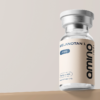
| Container Type | Vial (sealed, flip top, 3ml) |
| Usage | Laboratory research use only |
| Highlight | >99% Research-Grade Purity with COA |