Our Location
304 North Cardinal St.
Dorchester Center, MA 02124

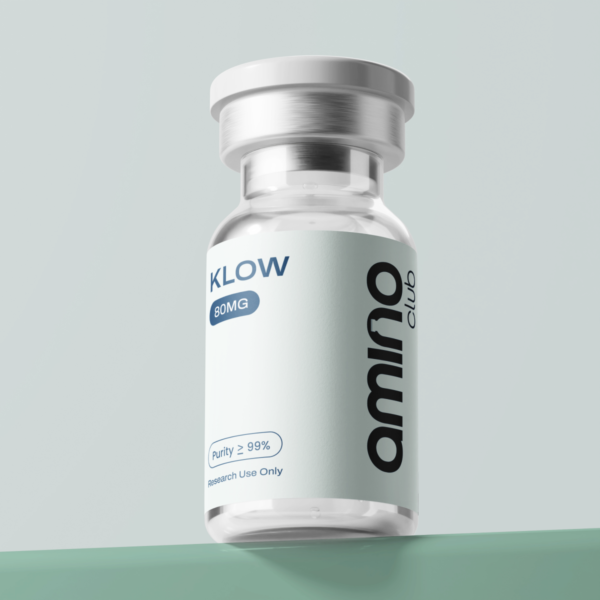
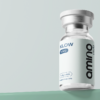
$129.99
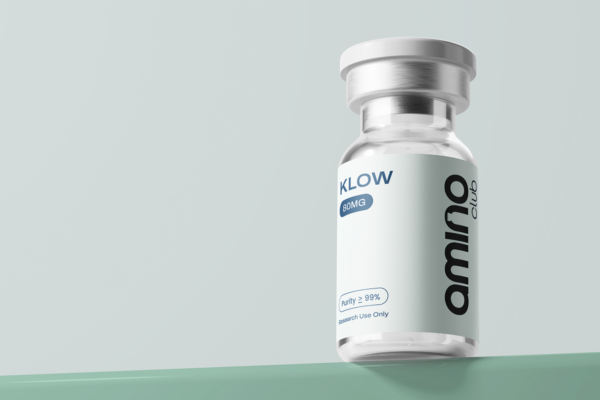
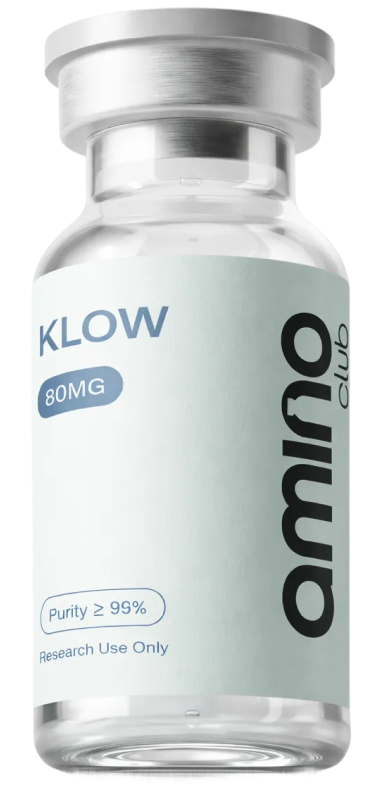
Buy KLOW Research Peptide Blend for sale by Peptide Amino Club. KLOW is a multi-peptide research blend formulated around KPV, LL-37, and BPC-157, three peptides that have been investigated independently across areas of molecular biology, inflammation-related signaling, tissue research, and cellular response studies. Because KLOW combines multiple research peptides, it provides an opportunity to investigate how distinct peptide components may interact within a controlled experimental system.
Amino Club presents KLOW as a research-focused peptide blend for qualified laboratory investigation. Researchers studying peptide combinations may evaluate individual components, formulation characteristics, peptide stability, and biological responses using appropriate experimental models.
The scientific evidence for each component varies considerably by peptide and research model. Findings from studies of individual ingredients should not automatically be interpreted as evidence for the combined KLOW formulation. For this reason, controlled experimental design, appropriate analytical characterization, and careful interpretation of results are essential.
KLOW Research Peptide Blend is supplied strictly for research use only and is not intended for human or veterinary use, self-administration, diagnosis, treatment, or prevention of any medical condition.
KLOW Research Peptide Blend is a multi-component peptide formulation designed for laboratory research involving peptide combinations and biological signaling. The blend is associated with three distinct research peptides: KPV, LL-37, and BPC-157.
Each component has a different molecular structure and research history. KPV is a short tripeptide derived from the C-terminal region of α-melanocyte-stimulating hormone (α-MSH). LL-37 is a human cathelicidin-derived antimicrobial peptide. BPC-157 is a synthetic pentadecapeptide that has been investigated primarily in preclinical experimental models.
The combination creates an interesting research material for laboratories studying how different peptides may influence overlapping or distinct molecular pathways.
Importantly, the presence of several peptides in a blend does not establish that their individual research findings will occur in the combined formulation. Researchers should evaluate KLOW as its own experimental material and rely on product-specific analytical documentation whenever available.
KLOW is a multi-peptide research blend containing KPV, LL-37, and BPC-157. Rather than representing a single molecular entity, the product consists of multiple peptide components that can be investigated individually and collectively.
This distinction is important when designing experiments. A single peptide can often be characterized according to its molecular weight, sequence, purity, stability, and receptor or cellular targets. A blend introduces additional variables, including the relative composition of each component, interactions between components, formulation stability, and analytical separation.
For researchers working with Amino peptide materials, KLOW can therefore serve as an experimental model for studying multi-peptide formulations.
KPV, or Lys-Pro-Val, is a short tripeptide associated with the C-terminal sequence of α-MSH. It has attracted research interest in inflammatory signaling and cellular biology.
Experimental studies have investigated KPV in models involving inflammatory pathways, including interactions associated with NF-κB signaling and related cellular responses. These findings are primarily experimental and should not be interpreted as evidence of clinical efficacy.
LL-37 is the only known human cathelicidin-derived antimicrobial peptide and forms from the precursor protein hCAP18. It is widely studied within innate immune research.
Laboratory research has examined LL-37 in relation to microbial membranes, immune signaling, cell migration, and host-defense mechanisms. Its broad biological activity makes it a particularly interesting research molecule, but it can also create complex experimental responses depending on the model and concentration used.
BPC-157 is a synthetic 15-amino-acid peptide that has been investigated extensively in preclinical research. Studies have explored its effects in various experimental models involving tissue responses, vascular signaling, and cellular processes.
The majority of the evidence surrounding BPC-157 remains preclinical. Therefore, findings from animal or laboratory models should not be presented as established human therapeutic outcomes.
The scientific value of a multi-peptide blend comes partly from the opportunity to investigate multiple molecular signals within the same experimental environment.
KPV, LL-37, and BPC-157 differ significantly in sequence, structure, biological origin, and research history. KPV is a small melanocortin-derived peptide, LL-37 is an innate immune peptide, and BPC-157 is a synthetic peptide investigated predominantly in preclinical models.
This diversity makes KLOW potentially useful for researchers interested in comparative peptide biology and multi-component formulations.
However, combining peptides also introduces additional analytical challenges. Researchers may need to distinguish individual components, confirm their identities, monitor stability, and determine whether the formulation remains consistent over time.
For this reason, product-specific analytical testing is particularly important when working with peptide blends.
Because KLOW contains multiple peptide components, there is no single mechanism that adequately describes the entire blend.
Research involving KPV has examined its potential influence on inflammatory signaling pathways and cellular responses. Experimental work has explored pathways such as NF-κB, a transcriptional regulator involved in immune and inflammatory signaling.
These observations provide a basis for continued laboratory research but do not establish therapeutic effects.
LL-37 is extensively studied as part of the innate immune system. Research has investigated its interactions with microbial membranes, immune cells, chemokines, and cellular signaling pathways.
LL-37 can have complex biological effects, and its behavior may vary substantially depending on the experimental environment.
BPC-157 has been studied in animal and laboratory models involving cellular signaling, vascular responses, and tissue-related processes.
The mechanisms proposed in the literature remain areas of ongoing investigation, and researchers should distinguish between experimental observations and established biological mechanisms.
KLOW can be studied as a model for investigating how multiple peptide components behave within a single formulation.
Researchers may evaluate peptide compatibility, stability, degradation, and analytical separation.
Because KPV and LL-37 have both been investigated in inflammatory and immune-related models, KLOW may be relevant to laboratory studies examining peptide-associated cellular signaling.
The inclusion of LL-37 makes KLOW particularly relevant to research involving antimicrobial peptide biology, host-defense pathways, and innate immune signaling.
Researchers can investigate how experimental cell systems respond to individual KLOW components compared with the complete blend.
Multi-component formulations create useful opportunities for studying peptide degradation, storage stability, environmental sensitivity, and interactions between formulation components.
Researchers may also use appropriate analytical methods to characterize the individual components of a peptide blend and monitor their relative integrity over time.
Reliable peptide research depends on clearly identified materials, appropriate documentation, and consistent laboratory handling.
Amino Club focuses on research-oriented peptide materials and provides product information and applicable analytical documentation where available. Researchers should review the Certificate of Analysis and product-specific documentation before beginning experimental work.
For laboratories researching Amino Club peptide products, KLOW offers a distinct opportunity to investigate a multi-component formulation rather than a single isolated peptide.
Researchers should also consider the unique analytical requirements of blends. Confirming the identity and integrity of individual components can be particularly important when interpreting experimental results.
Peptide stability depends on the individual sequences, formulation, packaging, environmental conditions, and duration of storage.
Researchers should follow the specific storage instructions supplied with the KLOW product and consult the applicable Certificate of Analysis for batch-specific information.
As a general laboratory practice, peptide materials should be protected from excessive heat, moisture, direct light, and unnecessary environmental exposure. Repeated temperature fluctuations should be minimized where practical.
Because KLOW contains multiple peptide components, researchers should pay particular attention to formulation-specific stability information rather than assuming that storage characteristics of one individual peptide apply to the complete blend.
For Research Use Only.
KLOW Research Peptide Blend is supplied exclusively for laboratory research, analytical, and educational purposes. It is not intended for human or veterinary use, self-administration, diagnosis, treatment, prevention, or cure of any disease or medical condition.
Researchers are responsible for ensuring that the handling, storage, testing, use, and disposal of research materials comply with applicable laws, regulations, institutional requirements, and laboratory safety procedures.
Research findings involving individual KLOW components should not automatically be interpreted as evidence for the combined formulation.
| Form | Lyophilized powder |
|---|---|
| Supplement Type | Peptide |
| Purity Level | >99% |
| Testing Standards | HPLC tested, Mass spectrometry verified |
| Quality Control | cGMP certified facility |
| Storage | Store at -20°C or below |
| Shelf Life | 2+ years when properly stored |
| Container Type | Vial (sealed, flip top, 3ml) |
| Usage | Laboratory research use only |
| Highlight | Cellular Signaling Research Applications |