Our Location
304 North Cardinal St.
Dorchester Center, MA 02124

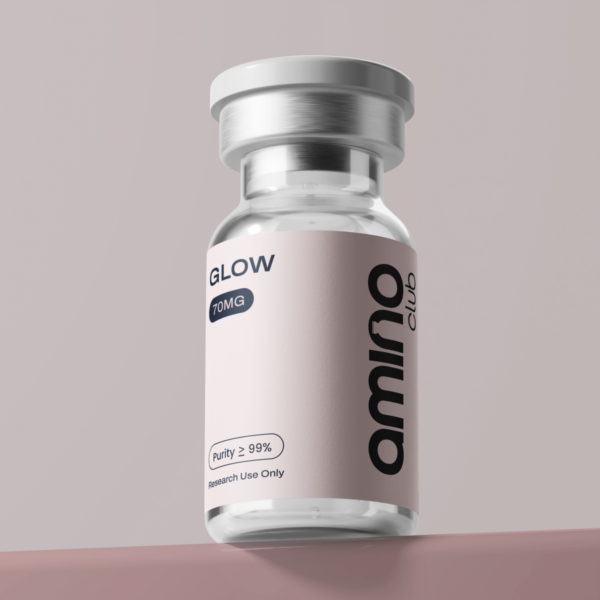
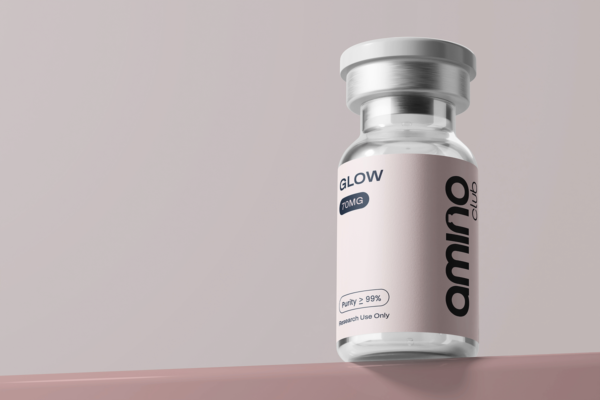
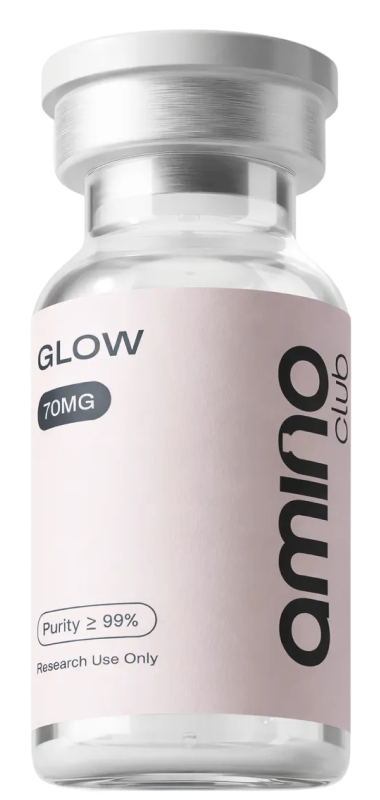
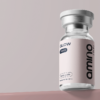
$114.99
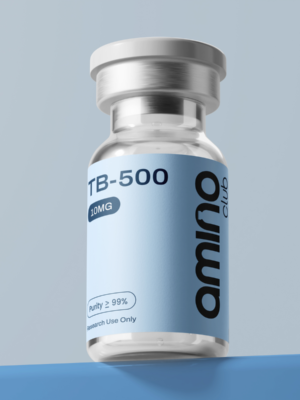
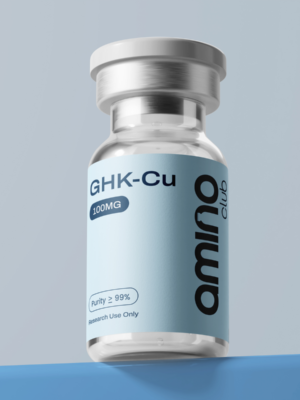
Buy GLOW Research Peptide Blend for sale by Peptide Amino Club. GLOW is a multi-peptide research formulation commonly composed of GHK-Cu, BPC-157, and TB-500. These three peptides have been investigated independently across areas including extracellular-matrix biology, cellular signaling, tissue remodeling, and peptide research. Because GLOW is a blend rather than a single molecular entity, its scientific profile should be evaluated by examining both the individual components and the formulation as a whole.
GHK-Cu is a copper-binding tripeptide studied in connective-tissue and extracellular-matrix research. BPC-157 is a synthetic pentadecapeptide investigated primarily in preclinical models, while TB-500 is a synthetic peptide fragment related to thymosin beta-4 and has been studied in cellular and cytoskeletal research.
Amino Club Peptides presents GLOW as a research-use material for controlled laboratory investigation. Importantly, research findings involving the individual peptides should not automatically be interpreted as evidence that the combined GLOW formulation produces the same effects or demonstrates synergy.
GLOW Research Peptide Blend is supplied strictly for research use only and is not intended for human or veterinary use, self-administration, diagnosis, treatment, or prevention of any medical condition.
GLOW Research Peptide Blend is a multi-component peptide formulation commonly associated with three research peptides: GHK-Cu, BPC-157, and TB-500. The combination has attracted interest within peptide research because its individual components have been investigated across different areas of cellular biology, extracellular-matrix research, tissue remodeling, and inflammatory signaling.
Unlike a single research peptide, GLOW is a blend of distinct molecular entities. This means researchers can investigate the properties of the individual components as well as the behavior of the combined formulation.
A commonly marketed GLOW formulation contains 50 mg GHK-Cu, 10 mg BPC-157, and 10 mg TB-500, for a total of 70 mg. However, GLOW is a vendor-defined research blend rather than a standardized pharmaceutical formulation, and composition can vary between suppliers.
For that reason, researchers should always verify the exact composition, ratio, analytical documentation, and batch information for the specific GLOW product being evaluated.
GLOW is not a single chemical compound with one molecular formula or one defined mechanism. Instead, it is a multi-peptide research formulation containing separate peptide components.
The three commonly associated components are:
The scientific literature surrounding these compounds exists primarily at the individual-component level. Current literature does not establish that the GLOW combination itself produces a validated synergistic biological effect.
This distinction is important when designing experiments and interpreting results.
GHK-Cu, or copper tripeptide, consists of the peptide sequence Gly-His-Lys associated with copper. It is a naturally occurring peptide complex that has been investigated in skin biology, extracellular-matrix research, cellular signaling, and connective-tissue models.
Research has examined GHK-Cu in relation to collagen-associated pathways, matrix remodeling, wound-related cellular processes, and gene-expression responses.
Because copper is an important biological cofactor, the interaction between GHK and copper is also relevant to research examining metallopeptide structure and function.
BPC-157 is a synthetic pentadecapeptide consisting of 15 amino acids. It has been studied extensively in animal and laboratory models involving cellular signaling, vascular responses, gastrointestinal research, and tissue-related processes.
Much of the available evidence remains preclinical, meaning findings from experimental models cannot automatically be extrapolated to humans.
Within GLOW, BPC-157 represents one component of a broader multi-peptide research formulation rather than a standalone treatment.
TB-500 is commonly described as a synthetic fragment related to thymosin beta-4, a naturally occurring protein involved in cellular processes associated with actin dynamics.
Research surrounding thymosin beta-4 and related peptide fragments has investigated cell migration, cytoskeletal organization, angiogenesis-related processes, and tissue biology.
The exact biological properties of a synthetic TB-500 preparation should be evaluated according to its specific molecular identity and analytical characterization rather than assumed from research involving full-length thymosin beta-4.
The scientific rationale behind investigating GLOW comes from the different biological areas represented by its individual components.
GHK-Cu has been studied extensively in connection with extracellular-matrix biology and skin-related research. BPC-157 has been investigated mainly in preclinical tissue and cellular models. TB-500 and thymosin beta-4-related research has focused on cellular movement, actin organization, and related processes.
Combining these peptides creates an opportunity to investigate multi-component peptide systems under controlled experimental conditions.
However, researchers should avoid assuming that combining compounds automatically creates synergy. A blend can produce additive, independent, antagonistic, or otherwise unexpected effects. Experimental testing is required to determine how the components actually behave together.
This makes GLOW particularly interesting from a formulation and comparative research perspective.
GHK-Cu provides a research pathway centered on the extracellular matrix (ECM), a network of proteins and molecules that provides structural and biochemical support to cells.
Researchers can investigate how copper peptide signaling relates to matrix-associated proteins, fibroblast behavior, collagen-related processes, and cellular responses.
Thymosin beta-4-related research has examined the relationship between actin dynamics and cell movement. Because actin is an important component of the cytoskeleton, these studies provide a basis for investigating cellular migration and structural changes.
TB-500 can therefore be studied within appropriate experimental models involving cytoskeletal organization and cellular movement.
BPC-157 has been investigated in various preclinical models involving cellular and tissue responses. These studies provide a basis for continued research into peptide-mediated signaling under controlled experimental conditions.
Importantly, these findings should remain separated from claims about established human therapeutic effects.
GLOW can be used as a model for investigating how several distinct peptides behave when supplied within one formulation.
Researchers may compare the combined formulation with each individual peptide to determine whether observed responses differ.
The presence of GHK-Cu makes GLOW relevant to laboratory research involving extracellular-matrix organization, connective-tissue biology, and related cellular pathways.
Researchers can investigate GLOW and its individual components in appropriate experimental models involving cell migration and cytoskeletal behavior.
Multi-component blends introduce unique stability questions. Researchers can investigate whether individual components maintain their chemical integrity during storage and under different experimental conditions.
GLOW can also be useful for research involving analytical separation and identification of multiple peptides within a single formulation.
Techniques such as chromatography and mass spectrometry may be used to characterize individual components when appropriate analytical documentation is required.
One useful approach is comparing the complete GLOW formulation against its individual components. This allows researchers to determine whether the combined formulation produces responses that differ from those associated with individual peptides.
Reliable peptide research begins with clearly characterized research materials. Researchers commonly consider factors such as peptide identity, purity, analytical testing, batch documentation, formulation, storage requirements, and material consistency.
Amino Club focuses on research-oriented peptide materials and provides product information and applicable quality documentation where available.
For a multi-component formulation such as GLOW, analytical documentation can be particularly important. Researchers should verify the identity and composition of individual components rather than relying solely on the blend name.
Amino Club Peptides are positioned for controlled laboratory research, with an emphasis on providing clear product information and maintaining a research-use-only distinction.
Peptide stability can vary according to molecular structure, formulation, packaging, moisture exposure, temperature, light, and storage duration.
Researchers should follow the specific storage instructions provided with their GLOW product and consult the applicable Certificate of Analysis for batch-specific information.
For lyophilized research materials, researchers should minimize exposure to excessive heat, moisture, and direct light. Repeated temperature fluctuations should also be minimized where practical.
Because GLOW contains multiple peptide components, researchers should not automatically assume that the storage characteristics of an individual peptide apply to the complete blend.
For Research Use Only.
GLOW Research Peptide Blend is supplied exclusively for laboratory research, analytical, and educational purposes. It is not intended for human or veterinary use, self-administration, diagnosis, treatment, prevention, or cure of any disease or medical condition.
Researchers are responsible for ensuring that the handling, storage, testing, use, and disposal of research materials comply with applicable laws, regulations, institutional requirements, and laboratory safety procedures.
Research findings involving GHK-Cu, BPC-157, or TB-500 individually should not be interpreted as proof of efficacy, safety, or synergy for the combined GLOW formulation.
| Form | Lyophilized powder |
|---|---|
| Supplement Type | Peptide Blend |
| Purity Level | >99% |
| Testing Standards | HPLC tested, Mass spectrometry verified |
| Quality Control | cGMP certified facility |
| Storage | Store at -20°C or below |
| Shelf Life | 2+ years when properly stored |
| Container Type | Vial (sealed, flip top, 3ml) |
| Usage | Laboratory research use only |
| Highlight | Comprehensive Tissue Remodeling Studies |